
India is the second most optimistic nation.

Business sentiment among Asia's top companies deteriorated in the third quarter, led by businesses in export engines such as China and South Korea, ending three consecutive quarters of improving sentiment.
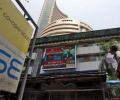
The BSE's arm Asia Index has announced Wipro will replace Bajaj Auto in the 30-share Sensex. The move is part of a semi-annual rebalancing exercise and will take effect when the market opens for trading on December 20. On account of the rejig, Wipro will see buying by passive funds to the tune of Rs1,300 crore, while Bajaj Auto will see selling of Rs 636 crore, estimate analysts.

India's manufacturing sector growth fell to 18-month low in December amid softer increase in factory orders and output, despite minimal inflation, a monthly survey said on Wednesday. The HSBC India Manufacturing PMI survey, conducted by S&P Global, showed that there were softer, albeit sharp, increase in factory orders and output, while business confidence towards the year-ahead outlook strengthened. The seasonally adjusted HSBC India Manufacturing Purchasing Managers' Index (PMI) fell from 56 in November to an 18-month low of 54.9 in December.

ICICI Bank, Axis Bank, Wipro, Kotak Mahindra Bank and NTPC were among the major gainers in the Sensex pack. The five stocks that defied the trend included UltraTech Cement, Mahindra & Mahindra, Titan, Tata Motors and Nestle.

State Bank of India was the biggest gainer in the Sensex pack, rising 4.24 per cent, followed by Tata Steel, Axis Bank, Maruti, NTPC, PowerGrid, ITC and Nestle India. Reliance jumped 1.15 per cent to end at Rs 2,962.60 apiece on BSE.

Rs 1,000 now buys $13.5 against $14 a year ago.

Global financial markets are wrong in hoping that the worst is over in geopolitical crises such as the Iran-Israel conflict and the Russia-Ukraine war, wrote Christopher Wood, global head of equity strategy at Jefferies, in a recent note to investors called 'GREED & fear'. While most investors and the media are focused on United States (US) Federal Reserve policy and the "endless chatter" of Fed governors, Wood believes the news flow in the financial sphere "pales into complete insignificance" compared with the "tectonic shifts" going on in geopolitics.

India's second richest person Gautam Adani received a total remuneration of Rs 9.26 crore in the fiscal year ended March 31, 2024, lower than most industry peers as well as his own key executives.

Oil and LNG prices are likely to shoot up if Iran is to block Strait of Hormuz, through which countries like India import crude oil from Saudi Arabia, Iraq and UAE, leading to a spike in inflation, analysts said on the Iran-Israel conflict. The Iran and Israel conflict has escalated over the last few days. Iran first launched drone and rocket attacks on Israel, which retaliated by firing a missile. Crude oil prices have hovered around USD 90 per barrel since the conflict.

Christopher Wood, global head of equity strategy at Jefferies reiterate his bullish view on Indian equities on the back of a steady fall in Covid cases coupled with a sharp economic recovery in India, reports Puneet Wadhwa.

The rally in PSBs, analysts feel, was more a knee-jerk reaction to the development, and the actual benefits will start to accrue once the addition takes place in 2024. "The actual benefit for banks from the inclusion in JP Morgan's EM Index will accrue from June 2024 onwards. "Until then, the larger fundamentals of the market will dictate the moves. "Once the initial euphoria subsides, bond markets will look to global cues which may trigger fresh selling," said Siddharth Khemka, head of retail research, Motilal Oswal Financial Services.

Prominent exits by promoters included a Rs 15,300 crore share sale in Indus Tower by Vodafone Plc, a Rs 9,300 crore share sale by the Tata group in Tata Consultancy Services.

Equity benchmark Nifty scaled the psychological milestone of 21,000 in afternoon trade on Friday, and the Sensex touched its all-time intraday high of 69,888.33 after the central bank's decision to keep policy rates unchanged in line with market expectations. The 50-share benchmark index opened on a bullish note, after taking a breather on Thursday, and rose to 21,006.10. As many as 25 stocks were trading in the green, and 24 stocks defied the broader market and were trading in the negative territory.

The Indian economy is projected to grow at 6.3 per cent in current financial year aided by investment and domestic demand. According to a World Bank report released on Tuesday, India continues to show resilience against the backdrop of a challenging global environment. In India, which accounts for the bulk of South Asia region, growth is expected to remain robust at 6.3 per cent in 2023-24, India Development Update of the World Bank said.
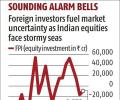
Foreign portfolio investors (FPIs) have withdrawn Rs 25,305 crore from domestic markets since September. FPIs were net sellers in the first two months of 2023, but from March to August, they purchased equities worth Rs 1.7 trillion. This selling trend has caused the National Stock Exchange Nifty Index to decline by 3.2 per cent from its September highs. FPI selling initially began in September as profit-taking but intensified due to rising US bond yields and uncertainty regarding the rate hike trajectory.

Gender equality might have improved over the years but India's working women still contend with the strongest gender bias across Asia Pacific countries, says a report. According to the LinkedIn Opportunity Index 2021, more women in India have experienced the impact of gender on career development when compared to the APAC region. "In India, more than 4 in 5 working women (85 per cent) claim to have missed out on a raise, promotion, or work offer because of their gender, compared to the regional average of 60 per cent," the report said.

Stake sales by promoters and private equity/venture capital (PE/VC) investors this year are already exceeding twice those of last year. So far this calendar year, the selling stands at over Rs 87,400 crore, 2.2 times the Rs 39,700 crore worth of shares sold by promoters and PE/VCs in 2022. This year's tally has received a boost from stake sales by Adani group promoters.

Nearly 14.3 million people, including children, are 'trapped' in modern-day slavery in India, which tops a global index of people under bondage across the world with an estimated 35.8 million people enslaved, a new research said on Monday.

The recent rally in small and midcap (SMID) stocks is not backed by fundamentals and is a case of irrational exuberance, analysts at Kotak Institutional Equities said in a recent report. The fundamentals of most of these companies have, in fact, worsened over the last few months, they noted. Yet, some analysts expect the bull run in these stocks to continue amid intermittent corrections.

Market participants attribute the stability to the Reserve Bank of India's timely intervention in the foreign exchange market, both in terms of selling and buying dollars.

The services sector growth in India rose to a 13-year high in September on sharp increase in new business amid strong demand conditions, and job numbers continued to increase as overall business mood improved, a monthly survey said on Thursday. The seasonally adjusted S&P Global India Services PMI Business Activity Index rose from 60.1 in August to 61 in September, signalling a sharp upturn in output. In Purchasing Managers' Index (PMI) parlance, a print above 50 means expansion while a score below 50 denotes contraction.

Nikkei 225 index hit the 40,000 mark for the first time ever on Monday, continuing its bull-run that saw the index reclaim its 1989 peak of 34,000 levels in February. as global investors latched on to Japan's biggest companies on improving shareholder returns, the weaker yen and booming corporate profits. Analysts remain bullish on Japan, mostly aided by gains in technology shares. Adoption of artificial intelligence (AI), according to a note by Morgan Stanley, is likely to benefit Japanese companies, which is almost at par with the US-based companies.

London-based index creator FTSE recently tied up with the MCX Stock Exchange to offer a slew of new domestic indices and launch a range of international FTSE indices that will be listed and traded on the MCX-SX when it gets regulatory approval. Paul Hoff, managing director, Asia-Pacific, FTSE, spoke to Business Standard on plans for the venture.

Maintaining the balance of gut microbiota is important as an imbalance, also known as dysbiosis, can cause or aggravate different diseases, including but not limited to digestive problems such as inflammatory bowel syndrome, mental health issues like anxiety and depression and menstrual problems.

Alternative Investment Funds (AIFs) with a lock-in period performed better than the ones that allow investors to withdraw capital at any time. Close-ended schemes had a median return of 5.62 per cent in December, according to data from industry tracker PMSBazaar. The median returns for open-ended schemes were 3.91 per cent

Asian Paints dropped the most by 1.33 per cent. IndusInd bank fell 1.2 per cent, Axis Bank by 1.19 per cent, SBI by 1.12 per cent, Bajaj Finance by 1.07 per cent, Nestle by 1.04 per cent, and TCS by 0.97 per cent. Hindustan Unilever, Reliance Industries, Power Grid and Kotak Bank also retreated. Maruti Suzuki was the lead gainer, rising by 2.22 per cent.

Dr Reddy's was the top gainer in the Sensex pack, rising over 3 per cent, followed by PowerGrid, TCS, HCL Tech, Infosys and Reliance Industries. On the other hand, L&T, IndusInd Bank, Bajaj Finserv and Bharti Airtel were among the laggards.

'An in-house contest encourages employees to share yoga and well-being practices with their families.'

'We expect the bull-market phase to still persist, but now led by large-caps which offer better valuation and benefit from FII inflows.'
'We expect continued pressure on midcaps, but any sharp correction looks unlikely from here on.'

'Focus on 19,400/64,900 as the key resistance levels for the Nifty/Sensex.'

Stocks of public sector undertakings (PSUs) have been on fire in the past year as investors cheered an improvement in key operating metrics and embraced counters of these state-owned enterprises, analysts suggest. The S&P BSE PSU Index has gained over 90 per cent in the past year, rising much higher than the S&P BSE Sensex, which has rose nearly 19 per cent during this period, according to ACE Equity data. The BSE PSU Index, reports show, has delivered a compound annual growth rate (CAGR) of 28 per cent (including dividends reinvestments) over five years and risen by almost 60 per cent in the past year.

India's services sector activity eased in August but growth rates for new orders remain elevated, as services firms indicated the sharpest upturn in new export business which acted as a catalyst for firms to expand their workforces as well as output, a monthly survey said on Tuesday. Despite falling from 62.3 in July to 60.1 in August, the seasonally adjusted S&P Global India Services PMI Business Activity Index indicated one of the strongest increases in output seen since mid-2010. For the 25th straight month, the headline figure was above the neutral 50 threshold.

It hopes to attract billions of dollars in investment by this move, and may ease some restrictions on foreign inflows.

The list of guests included celebrities from across the globe, politicians, the who's who of Hindi and south Indian cinema world and almost all the top cricketers of the country.

Indian equity markets have a limited upside potential in the near-term as they negotiate the ensuing cyclical slowdown, wrote analysts at Nomura in a recent coauthored report led by Saion Mukherjee, their managing director and head of equity research for India. He, however, believes that the foundations are in place for sustainable growth over the medium-to-long term, and hence suggests a 'buy on dips' strategy to equity investors. As an investment strategy, Nomura prefers domestic-oriented sectors and companies over exporters, and prefers stocks that provide valuation comfort. Industrials and banks are their overweight sectors, while IT services and consumer discretionary are their underweight sectors.

With Housing Development Finance Corporation's (HDFC's) merger with HDFC Bank becoming effective on July 1, the merged entity is set to become the top weight in the benchmarks S&P BSE Sensex and the National Stock Exchange Nifty indices, dislodging the country's most valuable company, Reliance Industries (RIL), from its perch. HDFC will stop trading after July 13. At present, RIL has a weighting of close to 12 per cent in the Sensex and 10.3 per cent in the broad-based Nifty. Meanwhile, HDFC Bank and HDFC have weights of 9.9 per cent and 6.8 per cent in the Sensex and 8.8 per cent and 6 per cent in the Nifty, respectively.

TCS was the top gainer in the Sensex pack, rising around 4 per cent, followed by ONGC, ICICI Bank, HDFC Bank, Dr Reddy's, HDFC and HCL Tech. NSE Nifty advanced 76.65 points to 14,581.45.

Markets in countries whose economic fortunes were closely linked to China's growth tumbled.
